Foundational explainer connecting visual identity to brand strategy, culture, and customer perception. The entry-level piece every founder should read before starting any brand work.
Your logo is not your brand.
This distinction sounds like a semantic argument until you realise how many expensive brand projects fail because the client and the agency were talking about different things.
What a Logo Is
A logo is a mark. A visual symbol that identifies your business — a unique, ownable combination of shapes, letterforms, and sometimes colour that says "this is us" when people see it.
It's incredibly important. Done well, a logo is instantly recognisable, distinctive from competitors, and appropriate for the context in which it appears.
But it's still just a mark. It identifies. It doesn't, by itself, communicate what you stand for, why anyone should trust you, how you make people feel, or what makes you different from the competition.
What a Brand Actually Is
A brand is the total impression your business makes on everyone who encounters it.
That impression is built from many things simultaneously:
- The visual identity (logo, typography, colour, imagery)
- The tone and language you use in every communication
- The quality and character of your products or services
- The experience of buying from you or working with you
- The way your team talks about the company
- What your clients say about you when you're not in the room
- The cultural associations your business carries
A brand is what people feel and believe about your business. The logo is just the cue that triggers those feelings and beliefs.
A useful framing: a logo is what you look like. A brand is what you are.
Why the Distinction Matters Commercially
The practical consequence of confusing logo with brand is that companies invest in the visible symptom while neglecting the underlying condition.
A new logo for a company with no strategic positioning, no consistent voice, and no clear point of differentiation produces a company that looks like it has its act together without actually having its act together. The impression is surface-level and fragile — it takes one sales conversation or one client experience to reveal that the depth isn't there.
Conversely, companies with genuinely strong brands often maintain visual identities that are functional rather than exceptional — and win anyway. Because the substance behind the mark is what does the commercial work.
The Components That Actually Build a Brand
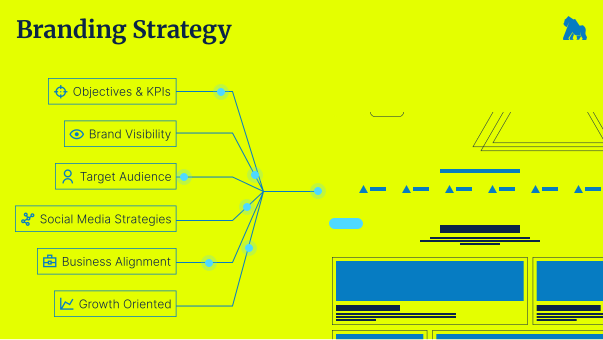
Brand strategy: The decisions about who you serve, what position you occupy in your market, and what makes you genuinely different from alternatives. This is the foundation.
Brand voice: How you communicate — consistently, across every channel and context. The vocabulary, the register, the things you say and don't say. Voice is often more recognisable than visual identity, especially in B2B markets.
Visual identity: More than a logo — the complete visual language of the brand. Typography system, colour palette, photography and illustration style, layout principles. A coherent visual identity is a system, not an asset.
Brand experience: How working with you actually feels. Responsiveness, quality of thinking, reliability, how you handle problems. Every client interaction either reinforces or undermines what the brand promises.
Brand culture: What your team believes and how it shows up in their work. Internal alignment on what the company stands for produces more consistent external expression than any style guide.
What This Means in Practice
If you're planning any kind of brand work, the right sequence is:
- Get clear on strategy (positioning, audience, differentiation)
- Develop voice and messaging (what you say and how you say it)
- Build a visual identity that expresses those decisions
- Design the experiences and materials that bring it to life
A logo created without the first two steps is a beautiful mark built on shaky foundations. It may look right. It won't work right.
The businesses with strong brands treat the whole system as a connected investment — not a series of separate projects. The logo serves the strategy. The strategy serves the business.