Explicación fundamental que conecta la identidad visual con la estrategia de marca, la cultura y la percepción del cliente. Es la lectura básica que todo fundador debería conocer antes de empezar cualquier trabajo de marca.
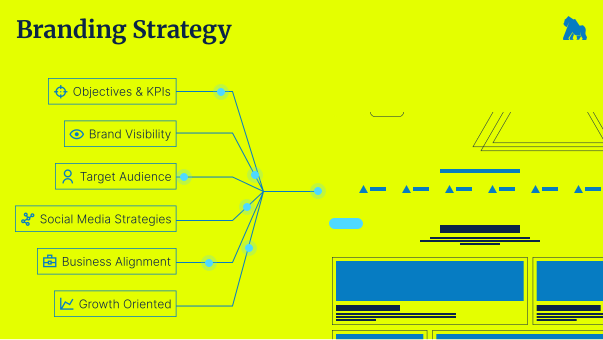
Tu logotipo no es tu marca.
Esta distinción parece un debate semántico hasta que te das cuenta de cuántos proyectos de marca costosos fracasan porque el cliente y la agencia hablaban de cosas distintas.
Qué es un logotipo
Un logotipo es una marca. Un símbolo visual que identifica a tu empresa: una combinación única y propia de formas, tipografías y, a veces, color que dice "somos nosotros" cuando la gente lo ve.
Es increíblemente importante. Si está bien hecho, un logotipo es reconocible al instante, se distingue de la competencia y es apropiado para el contexto en el que aparece.
Pero sigue siendo solo una marca. Identifica. Por sí solo, no comunica lo que representas, por qué deberían confiar en ti, cómo haces sentir a la gente o qué te diferencia de la competencia.
Qué es realmente una marca
Una marca es la impresión total que tu empresa causa en todos los que interactúan con ella.
Esa impresión se construye a partir de muchos elementos simultáneamente:
- La identidad visual (logotipo, tipografía, color, imágenes)
- El tono y el lenguaje que utilizas en cada comunicación
- La calidad y el carácter de tus productos o servicios
- La experiencia de comprarte o trabajar contigo
- La forma en que tu equipo habla de la empresa
- Lo que tus clientes dicen de ti cuando no estás presente
- Las asociaciones culturales que conlleva tu negocio
Una marca es lo que la gente siente y cree sobre tu negocio. El logotipo es solo la señal que activa esos sentimientos y creencias.
A useful framing: a logo is what you look like. A brand is what you are.
Why the Distinction Matters Commercially
The practical consequence of confusing logo with brand is that companies invest in the visible symptom while neglecting the underlying condition.
A new logo for a company with no strategic positioning, no consistent voice, and no clear point of differentiation produces a company that looks like it has its act together without actually having its act together. The impression is surface-level and fragile — it takes one sales conversation or one client experience to reveal that the depth isn't there.
Conversely, companies with genuinely strong brands often maintain visual identities that are functional rather than exceptional — and win anyway. Because the substance behind the mark is what does the commercial work.
The Components That Actually Build a Brand
Brand strategy: The decisions about who you serve, what position you occupy in your market, and what makes you genuinely different from alternatives. This is the foundation.
Brand voice: How you communicate — consistently, across every channel and context. The vocabulary, the register, the things you say and don't say. Voice is often more recognisable than visual identity, especially in B2B markets.
Visual identity: More than a logo — the complete visual language of the brand. Typography system, colour palette, photography and illustration style, layout principles. A coherent visual identity is a system, not an asset.
Brand experience: How working with you actually feels. Responsiveness, quality of thinking, reliability, how you handle problems. Every client interaction either reinforces or undermines what the brand promises.
Brand culture: What your team believes and how it shows up in their work. Internal alignment on what the company stands for produces more consistent external expression than any style guide.
What This Means in Practice
If you're planning any kind of brand work, the right sequence is:
- Get clear on strategy (positioning, audience, differentiation)
- Develop voice and messaging (what you say and how you say it)
- Build a visual identity that expresses those decisions
- Design the experiences and materials that bring it to life
A logo created without the first two steps is a beautiful mark built on shaky foundations. It may look right. It won't work right.
The businesses with strong brands treat the whole system as a connected investment — not a series of separate projects. The logo serves the strategy. The strategy serves the business.